Travelogue Bolivia / Peru 2003
Lago Titicaca
March 23rd, 2003
Dear Friends,
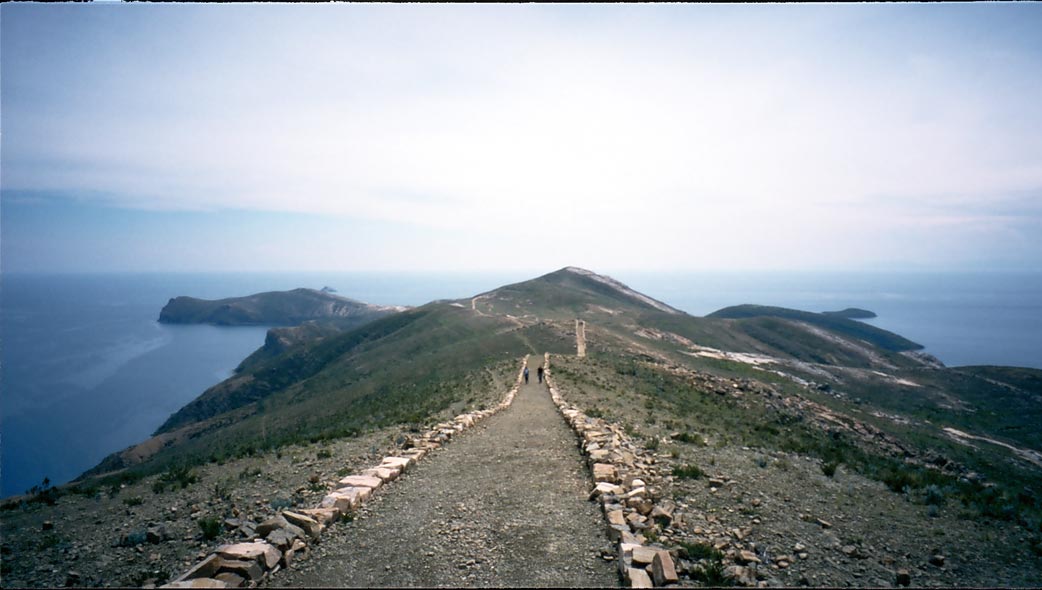
The morning after I sent you my last report I visited Isla del Sol. We started at half eight and two hours later we reached the north of the island from where we spent the day walking all the way down to the south. There aren’t many Inka ruins to see, and the ones we visited weren’t very impressive compared to the things I saw in Central America. Anyway they are not very old. The Inka civilization appeared only short time before the Spaniards came to South America. But it was a nice hike. The island is harsh but has its beauty. Unfortunately it was cloudy and we couldn’t see the surrounding mountains which are said to be stunning. It was my first real hike during this trip and the island is at 4000m. So it sometimes was a breath taking experience. During the hike I saw for the first time in my life a halo around the sun, a kind of circular rainbow in some 15 degree distance. It was beautiful though some people believe that it is a sign of upcoming evil like earthquakes etc. And I did not swim in the lake though the water is beautiful and not that cold.


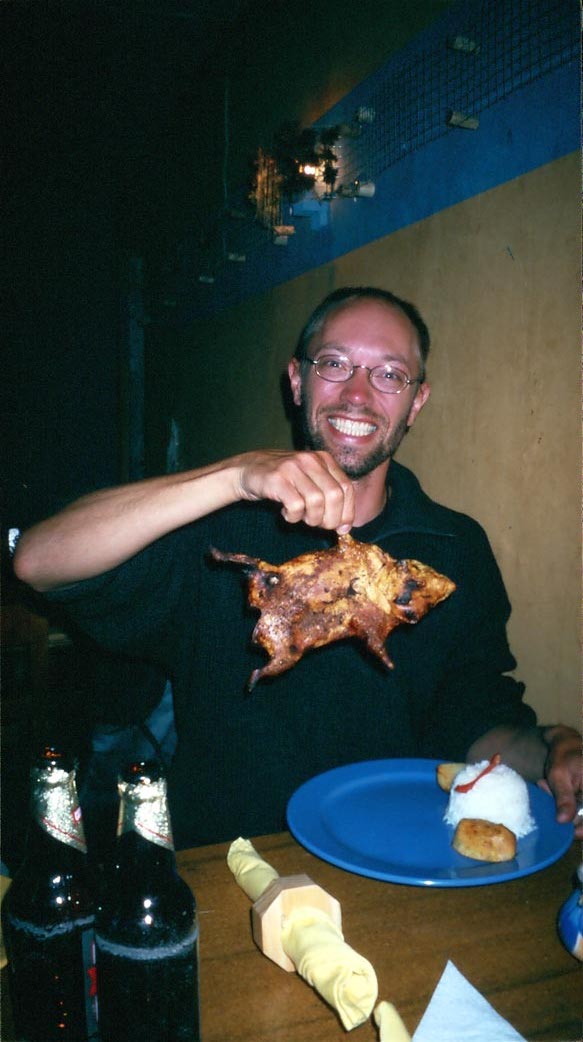
In the boat back I met three Germans who also wanted to go to Puna in Peru. As it wasn’t that late when we arrived we decided to go the same day and arrived some four hours later. I was extremely tired and hungry but curious enough to try guinea pig. I hope that none of the female readers of this report will be too mad at me because I ate one of these cuties. Anyway I won’t do it again as it tasted a bit like chicken, but chicken is tastier, cheaper and has a lot more meat.
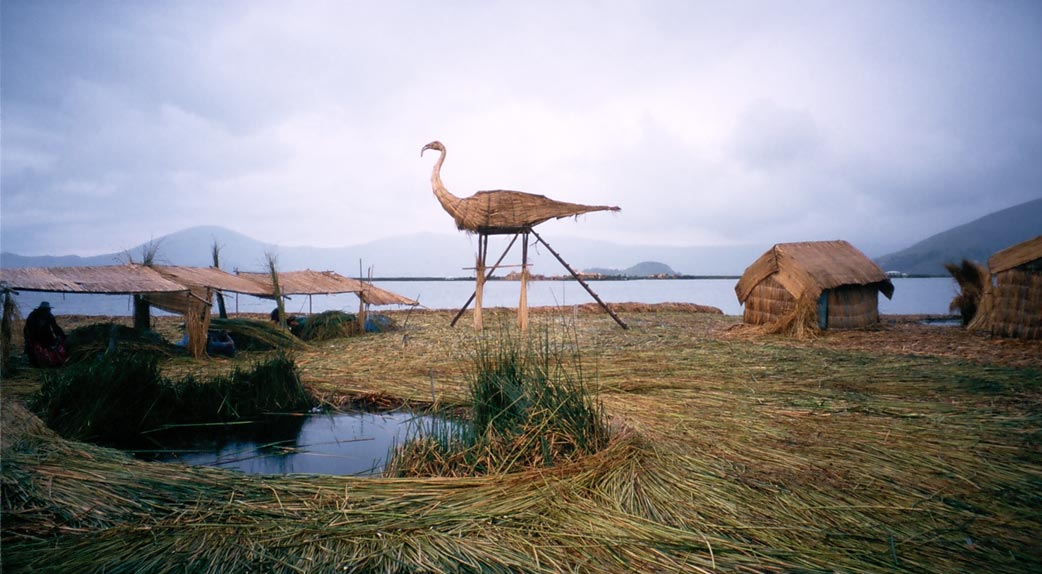
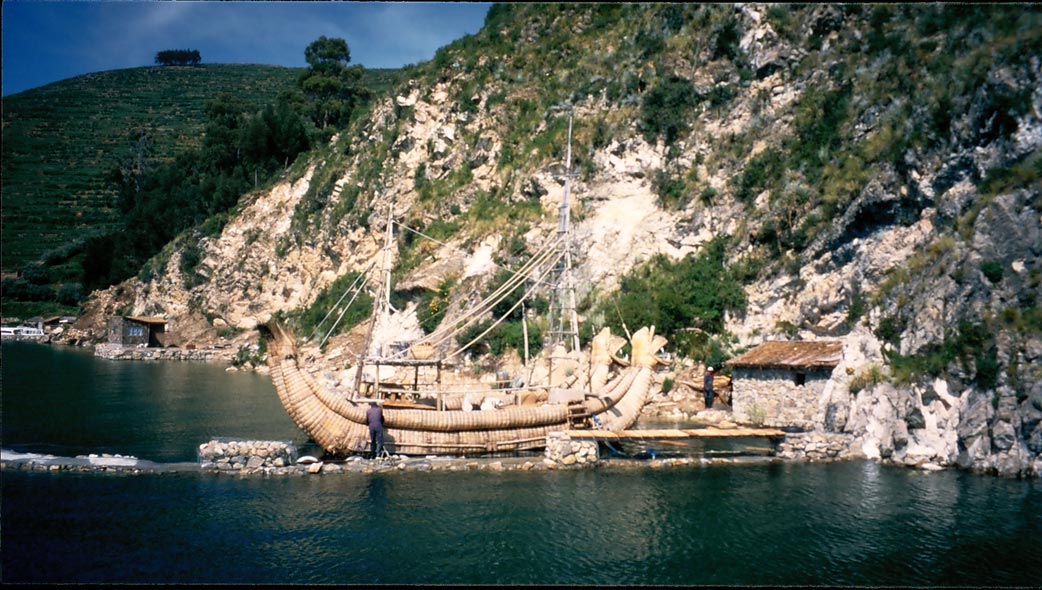
Although we were very tired the height didn’t let us sleep well and hence we were all up by six, ready to visit the Uros. The Uros are the main attraction of Puna, the so called floating islands. The indigenous habitants of the region used a groundwork of reed to build their houses on. When the level of the Lago Titicaca started to rise, they added more and more reed until some of their houses started to float and sailed on the lake. That’s not a bad thing for a people of fisherman. Nowadays the islands don’t float any more, they are interconnected to each other and the two to four meter thick reed foundations stand on the bottom of the sea in shallow regions. But still they have to add more and more reef or the lake will flood their (anyway wet) houses. They use reed to build anything including their traditional boats which often have dragon heads. Some time ago someone wanted to prove that the people of South America came originally from Indonesia and sailed the pacific in one of these boats.
Of course tourism changed the Uros’ life drastically, about half of the islands (all together there are 250 families left) accept visitors. This day we were the first, a big advantage as it really gets crowded later in the day. But as soon as we reached the islands the doors of some houses opened and some women came to open their stalls to sell lots of reed made souvenirs and children urged us to buy their hand drawn postcards. After spending less than an hour on two of the islands we went back, had an excellent breakfast, took a minibus to the border and continued to La Paz. I guess that Peru is the first (non transit) country I visited for less than 24 hours, but I definitely will come back as Machu Picchu, the biggest of all Inka Sites, is a must to visit. Unfortunately I didn’t have the time to go this time.